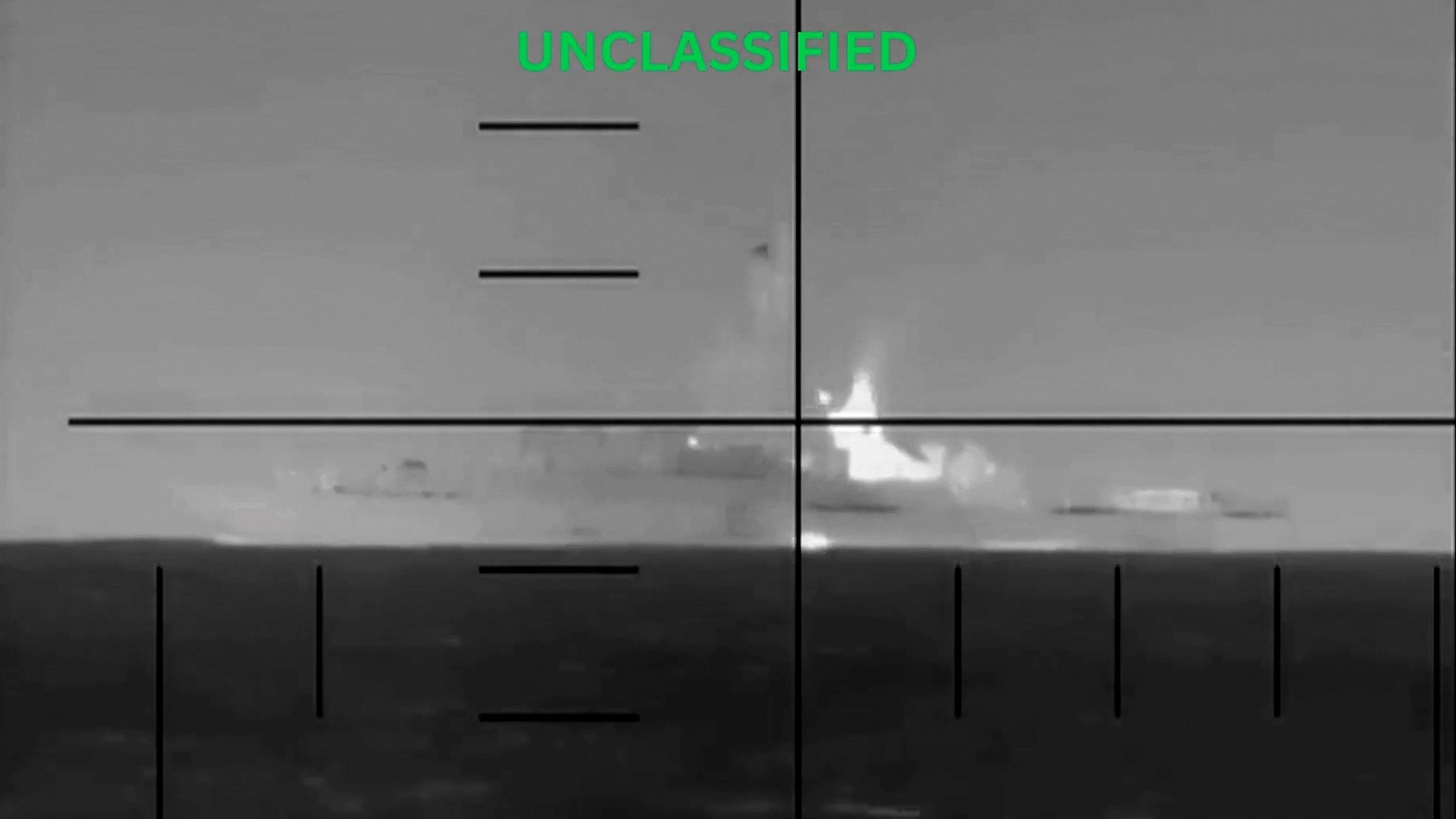
The Elusive Narrative: "US Torpedoed Iranian Ship" and Its Absence in Key US Overviews
In an era defined by instant information and extensive digital archives, searching for specific historical events can often yield a wealth of data. However, what happens when a particular query—such as "us torpedoed iranian ship"—leads not to detailed accounts, but to a conspicuous silence in some of the most prominent and trusted general overviews of US history? This article delves into this intriguing informational void, exploring why such a potentially significant event is not readily found in major US historical profiles and what implications this has for researchers and those seeking a comprehensive understanding of international relations.
The Search for a Specific Historical Event: "US Torpedoed Iranian Ship"
When investigating specific incidents involving international actors, researchers often begin with broad, authoritative sources. These typically include encyclopedic references, national historical profiles, and widely accepted governmental or academic overviews. The query, "us torpedoed iranian ship," suggests a specific naval engagement, an event that, if true, would likely carry considerable geopolitical weight and potentially merit inclusion in historical narratives concerning US-Iran relations, naval history, or specific regional conflicts. One would reasonably expect such an incident to be cataloged within comprehensive historical accounts or at least referenced in detailed timelines of significant international events.
However, as foundational research reveals, this specific incident appears conspicuously absent from general historical profiles. This immediately raises questions: Is it an obscure event? Is it misremembered or miscategorized? Or does its absence signify something more fundamental about how historical narratives are constructed and presented in generalist platforms?
Analyzing Key US Overviews: What Britannica, Wikipedia, and Nations Online Reveal (and Omit)
To understand this absence, it's crucial to examine the scope and purpose of the types of sources that were consulted. Encyclopedic entries and national profiles, while extensive, are designed to provide a broad understanding, focusing on major political developments, significant conflicts, economic trends, and cultural shifts. They offer a panoramic view, rather than a granular deep-dive into every single historical incident, especially those not widely corroborated or deemed pivotal to the overarching national narrative.
- Britannica: As a venerable encyclopedia, Britannica offers deep, scholarly articles on the United States, covering its land, climate, settlement patterns, government, and major historical periods. However, its broad scope necessitates a focus on overarching themes and widely acknowledged historical facts. Specific naval skirmishes, unless they are part of a major declared conflict or have far-reaching geopolitical consequences, might not find a place in its general overview of the nation's history.
- Simple English Wikipedia: This version of Wikipedia is designed for clarity and accessibility, presenting simplified summaries of complex topics. Its purpose is to provide an entry point for understanding, making it even less likely to include highly specific, potentially controversial, or less universally recognized historical incidents. Its emphasis is on the most fundamental aspects of US history and society.
- Nations Online Project - Destination USA: This platform typically provides country profiles with geographical, political, and economic information, often with a focus on travel and general facts. Its historical sections tend to be summary-level, highlighting key milestones rather than detailed military engagements.
The consistent finding across these diverse general sources—that they contain no content about "us torpedoed iranian ship"—is a significant observation. It suggests that if such an event occurred, it either falls outside the scope of what these general overviews deem essential information for a broad understanding of US history, or it is an event lacking widespread historical consensus and documentation within mainstream historical narratives. General US History Profiles: What They Detail, What They Omit, often streamline narratives for accessibility, sometimes leaving out events that, while potentially significant in specific contexts, are not considered foundational to the broader national story.
Understanding the Limitations of General Historical Sources
It's important to recognize that the absence of information in general overviews does not definitively prove that an event did not happen. Instead, it highlights the inherent limitations of these sources. Their primary function is to educate on the broad strokes, not to serve as an exhaustive archive of every single diplomatic incident, military action, or international encounter. Highly specific or contested claims often require a deeper dive into specialized historical texts, military records, or academic journals.
The Implications of Absence: Beyond the Standard Narrative
When a specific event like "us torpedoed iranian ship" is missing from standard historical profiles, it prompts several important considerations. This informational gap forces researchers to ponder where such an event would reside in the collective historical consciousness, if at all. The absence can imply several scenarios:
- A Lesser-Known Incident: The event might be a real incident but one that was minor in scale, had limited impact, or was quickly overshadowed by larger geopolitical developments. As such, it might only appear in highly specialized military histories or academic papers focused on very specific timeframes or regional conflicts.
- A Contested or Unverified Claim: The claim itself might lack widespread corroboration from primary sources or objective historical analysis. In such cases, reputable general overviews would naturally omit it to maintain accuracy and avoid propagating unverified information.
- A Misunderstanding or Misattribution: It's possible the search query refers to an event that has been misremembered, conflated with another incident, or inaccurately attributed. Naval engagements between the US and Iran have occurred, particularly during the 1980s in the Persian Gulf (e.g., Operation Praying Mantis), but the specific detail of "torpedoed Iranian ship" might not align with documented events in those contexts.
- A Fictional Event: In some instances, such a claim might simply not correspond to any documented historical reality.
For anyone performing research, this absence serves as a critical signal. It indicates that the standard narrative does not contain this information, compelling a shift from general inquiry to highly specialized investigation. This is where diligent researchers must go beyond the initial search and explore more focused avenues. Context Check: 'US Torpedoed Iranian Ship' Missing from US Pages further emphasizes this need for deeper contextual analysis.
Navigating Information Gaps and the Role of Critical Inquiry
The exercise of searching for "us torpedoed iranian ship" and finding it absent in general overviews underscores the vital role of critical inquiry in historical research. It's not enough to simply note an absence; one must actively investigate why that absence exists and where alternative information might be found. This process involves:
- Source Verification: Always question the origin and reliability of any information found, especially when it appears to contradict or be absent from mainstream historical accounts.
- Cross-Referencing: Seek out multiple sources, ideally from different perspectives (e.g., US archives, Iranian historical accounts, international reports, independent academic studies), to build a comprehensive picture.
- Understanding Bias: All historical narratives are, to some extent, shaped by the perspectives and intentions of their creators. Being aware of potential national, political, or ideological biases is crucial.
- Distinguishing Fact from Rumor: In the age of digital information, unverified claims can spread rapidly. Rigorous historical research demands a clear distinction between substantiated facts and unsubstantiated rumors.
The absence of an event in widely accessible sources should be a trigger for deeper, more focused investigation, rather than an automatic dismissal or confirmation of its non-existence. It highlights the vast difference between general knowledge and specialized historical understanding.
Practical Tips for Thorough Historical Research
For individuals seeking to unearth information on specific, potentially overlooked, or controversial historical events like "us torpedoed iranian ship," here are some practical tips:
- Broaden and Refine Search Terms: Instead of highly specific phrasing, try broader terms like "US-Iran naval engagements," "Persian Gulf incidents 1980s/1990s," or "US military actions in Iran." If a timeframe is suspected, narrow the search to specific years. Once broad information is found, refine keywords to be more precise.
- Consult Specialized Academic Databases: Platforms like JSTOR, ProQuest, or institutional academic libraries often contain peer-reviewed articles, dissertations, and specialized journals focusing on military history, international relations, or Middle Eastern studies. These are far more likely to contain detailed analyses of specific incidents than general encyclopedias.
- Explore Archival Records: If the event is significant but perhaps less publicized, it might be documented in declassified government documents, naval archives, presidential library collections, or diplomatic correspondence. Accessing these requires more effort but can yield primary source material.
- Review News Archives from the Period: Major international incidents are often reported by news outlets globally. Searching newspaper archives from the suspected period of the event can offer contemporaneous accounts, though these too must be critically evaluated for bias and accuracy.
- Look for Books by Specialized Historians: Historians who focus specifically on US-Iran relations, naval warfare, or specific regional conflicts are invaluable resources. Their works often synthesize primary sources and specialized studies into coherent narratives.
- Seek Out International Perspectives: Investigate historical accounts from Iranian sources, international organizations, or third-party countries to gain a more balanced and comprehensive understanding. This can reveal details or interpretations absent from US-centric narratives.
Remember that the goal is not just to find information, but to find reliable, well-corroborated information. The journey of discovering what happened, or why something is not widely known, is as important as the destination itself.
Conclusion
The exploration into the query "us torpedoed iranian ship" and its absence from key US historical overviews serves as a compelling case study in the complexities of historical research. It underscores that general encyclopedic knowledge, while an excellent starting point, is rarely the final word on specific, potentially nuanced, or less universally acknowledged events. The fact that Britannica, Simple English Wikipedia, and Nations Online Project do not contain this information highlights the selective nature of broad historical narratives and the necessity for researchers to delve deeper into specialized sources. This journey emphasizes the critical importance of intellectual curiosity, rigorous methodology, and a commitment to verifying information from multiple, credible sources, especially when confronting information gaps in the historical record.